

How to Choose Curtains for a Room: Practical Tips
Autor: Laura Jorge
6 Minute(s) to read / 25.10.2026


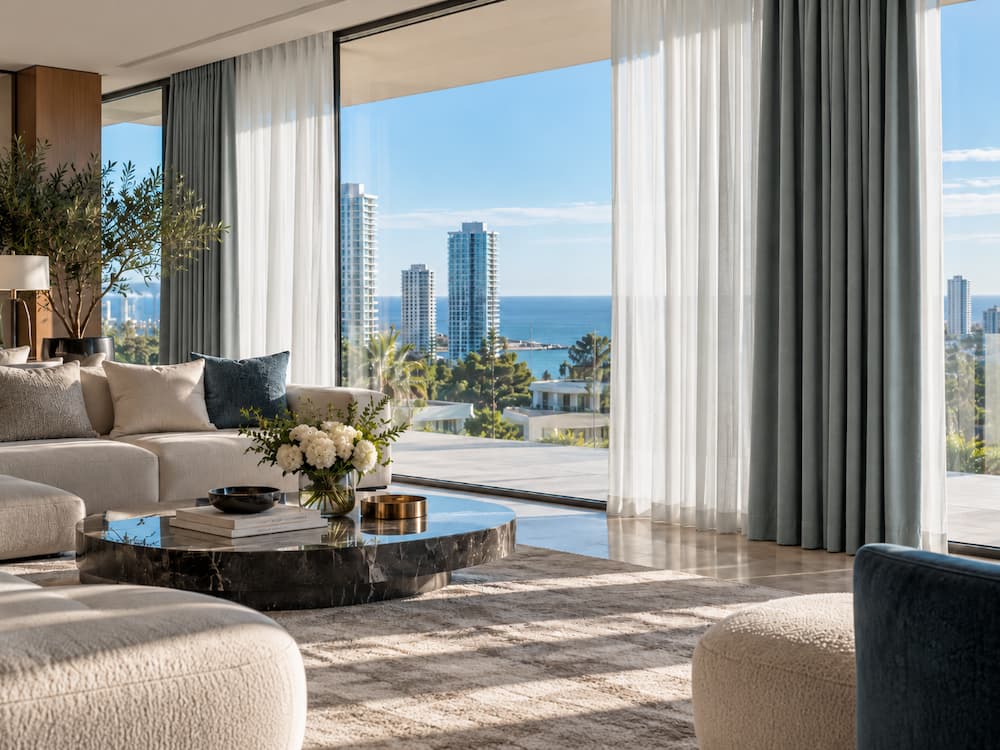
Curtains do far more than frame a window. They shape natural light, privacy, temperature, acoustics and the proportions of a space, which is why knowing how to choose curtains for a room matters as much as choosing the sofa. The difficulty is knowing where to start: window size, orientation, the purpose of the space, fabric, colour, length, heading style and operating system all pull in different directions.
This guide breaks the decision into practical steps so that how to choose curtains for a room becomes a sequence of straightforward choices rather than a guessing game.
Start with the Purpose of the Room
Before looking at a single fabric sample, think about how the room is used. A living room usually benefits from softened daylight and a bright, open feel. A bedroom needs privacy and genuine light control, especially when the windows catch strong morning or afternoon sun. Dining rooms call for fabrics that complement the furniture without weighing the space down, home offices need glare control, and children's rooms demand durability, safety and easy cleaning. In large open-plan spaces, made to measure curtains can define zones while keeping visual continuity.
Understanding the function of the room narrows the options immediately, which is why it is always the first step in how to choose curtains for a room.
Decide How Much Daylight You Want
Sheer and voile fabrics
Perfect voile curtains keep a room bright and airy while adding softness and daytime privacy. They work beautifully in living and dining areas, and they layer well under heavier fabrics for more control across the day.
Light-filtering fabrics
These reduce the intensity of sunlight without darkening the room. A practical middle ground when you want privacy and solar control but not a cave.
Blackout fabrics
Blackout curtains cut incoming light dramatically and are the obvious answer for bedrooms, guest rooms and media rooms. Pairing blackout panels with decorative sheers gives you a layered, sophisticated result that still performs.
Where daylight is intense, curtains also work well alongside roller blinds, which handle glare during the day while the curtains take over in the evening.
Choosing Curtains for Your Home: Fabric and Texture
Fabric determines both appearance and performance. Linen is the favourite for contemporary and Mediterranean interiors — its natural texture reads relaxed but refined, and it sits perfectly with neutral palettes, wood, stone and plaster, though it creases more readily than blends. Cotton is versatile, easy to maintain and available in almost any colour. Velvet adds depth, warmth and a more intimate atmosphere, ideal in bedrooms and elegant living rooms. Silk offers unmatched light reflection and elegance, but needs careful maintenance and protection from direct sun.
Technical fabrics deserve consideration too: UV resistance, stain resistance, acoustic damping and improved thermal behaviour all exist in modern textiles, and they matter in homes with large glazed openings.
Color Curtains for Living Room and Beyond
Colour changes the atmosphere of a space more than any other single choice. Neutrals — ivory, cream, beige, warm white, taupe, stone, soft grey — create a timeless backdrop that adapts to almost any interior. For something more expressive, deep green, terracotta, muted blue or warm ochre introduce personality without dominating.
Look at what already exists in the room: furniture, rugs, artwork, accessories. Curtains rarely need to match anything exactly. They usually look more considered when they complement the palette rather than copy it.
Size, Length and Fullness
Working with the proportions of the room
In smaller rooms, lighter fabrics and soft neutrals preserve a sense of space, and hanging the track above the window frame makes the ceiling feel higher. Larger rooms allow heavier fabrics, stronger colours and more generous volumes. For floor-to-ceiling glazing, full-height curtains emphasise the architecture.
Getting the length right
Finishing just above the floor gives a clean, practical result for high-traffic rooms. Curtains that lightly touch the floor look tailored and suit most contemporary interiors. Puddling — letting extra fabric gather on the floor — is dramatic and traditional, but collects dust and demands more upkeep.
Fullness
Fullness is the ratio of fabric to track width. Too little and the curtain hangs flat and cheap-looking; enough and it falls in deep, even folds. The right amount depends on fabric weight, heading style and whether the curtains are decorative or functional. Made-to-measure production lets these proportions be calculated precisely, which is often the difference between acceptable and excellent.
How to Select Curtains for Home: Headings and Tracks
The heading determines how the fabric attaches and how it falls. Wave headings create continuous soft folds and a clean architectural line, particularly on ceiling-mounted tracks. Pinch pleats are structured and classic. Eyelets form large regular folds on a pole and suit relaxed contemporary rooms. Rod pockets give a softer, more traditional finish.
The track is the part most people forget. Ceiling-mounted tracks create an uninterrupted line and make windows appear taller; recessed tracks disappear almost entirely; decorative poles become a deliberate feature. Electric tracks are worth considering for very wide spans or anywhere the curtains will be opened and closed daily.
Privacy, Sunlight and Thermal Comfort
Privacy needs vary enormously. A ground-floor window facing a street is a different problem from one overlooking a private garden. Sheers, privacy weaves and layered treatments all solve it in different ways without sacrificing daylight.
Sun exposure matters just as much. Curtains reduce glare, heat gain, UV damage and the fading of furniture and flooring, and south- or west-facing rooms usually need more protection than north-facing ones. On the thermal side, heavier fabrics and good linings reduce heat exchange through the glass — warmer in winter, cooler under strong summer sun. Anyone thinking about how to choose curtains for a room with large glazing should treat solar control as a performance requirement, not an afterthought.
Manual or Motorised?
Manual curtains remain elegant, simple and reliable for most rooms. Motorisation earns its place on very large or high windows, hard-to-reach glazing, bedrooms, open-plan spaces and smart homes. Motorised systems run from remotes, wall switches or home automation, and can be scheduled to open and close at set points through the day — useful for privacy, daylight and energy management alike.
Common Mistakes to Avoid
The most frequent error is choosing by colour alone. A fabric looks different depending on daylight levels, window size, wall colour, room orientation, time of day and artificial lighting. Wherever possible, view samples in the actual room, near the window, in both natural and electric light. Rushing this stage is the single quickest way to get how to choose curtains for a room wrong.
Frequently Asked Questions
How to choose curtains for home when every room is different?
Treat each room separately on function and light, then unify them through a shared palette or heading style so the house still reads as one interior.
How to choose curtains for your home: ready-made or made-to-measure?
Ready-made works for standard windows and tight budgets. Made-to-measure gives control over dimensions, lining, fullness, heading, track and operation — the right call for large, tall or unusually shaped windows.
How to choose the right curtains for your home with professional help?
A specialist handles measuring, fabric selection, proportions, tracks, motorisation and installation. That matters most in multi-room projects where small inconsistencies become visible.
Final Thoughts
Getting this right means balancing style, light, privacy, comfort, proportion and practicality. Start with how the room is used and how much daylight you want, then work through fabric, colour, length, fullness and heading, and finish with maintenance and installation. At Arte del Lusso, curtains are treated as part of the architecture rather than a finishing touch — because when they are properly measured, made and fitted, that is exactly what they become.