

Are Vertical Blinds Expensive? What Really Affects the Price
Autor: Laura Jorge
6 Minute(s) to read / 21.9.2026


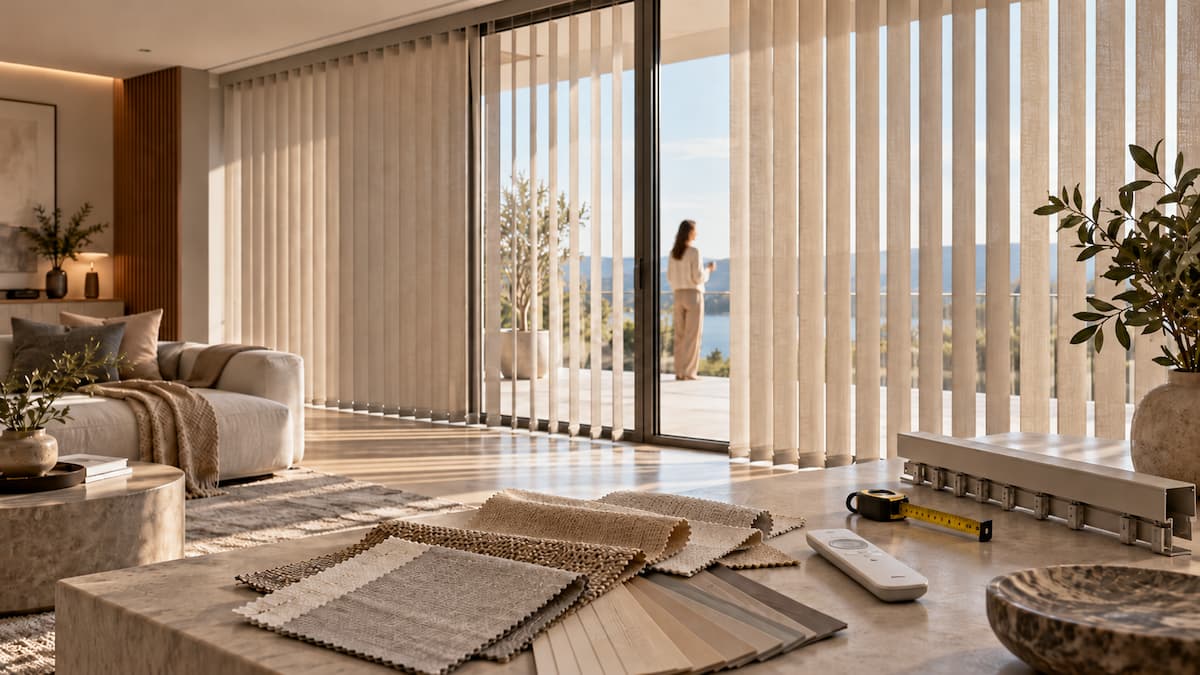
Are vertical blinds expensive? The honest answer is that it depends almost entirely on the specification. Vertical blinds exist in a very wide range of materials, sizes, operating systems and finishes, so two blinds that look similar can carry very different prices. A simple blind on a standard window is one of the more affordable window-treatment options, while a large made-to-measure system with premium fabric, motorisation and professional installation becomes a serious investment. This guide explains what drives that difference.
What Are Vertical Blinds?
Vertical blinds are window coverings made from individual vertical slats, or vanes, suspended from a horizontal headrail. The vanes tilt to control light and slide sideways to open the window.
They were once associated almost exclusively with offices, but modern collections use sophisticated fabrics, contemporary colours, textured finishes and varied slat widths that sit comfortably in residential interiors. Where roller blinds give a minimalist finish, venetian blinds a structured one and pleated blinds a compact stack, vertical blinds excel at covering wide areas: sliding doors, floor-to-ceiling glazing and corner windows. They also pair well with made to measure curtains when a room needs extra softness.
Are Vertical Blinds Expensive Compared With Other Options?
Covering several metres of glass, vertical blinds are usually one of the more cost-effective bespoke solutions. The useful question is not simply what they cost, but what you receive for the price. A budget blind covers a window. A premium system adds better materials, smoother operation, longer service life, finer light control and a more refined appearance.
The variables that move the price are consistent: window dimensions, fabric quality, opacity, slat width, headrail system, motorisation, manufacturing method, installation, number of windows and brand.
The Real Cost of Vertical Blinds Per Window
Window size
The single most obvious factor. A small bedroom window needs far less material than a sliding glass door, which requires more fabric, a longer headrail and additional components. Anyone asking are vertical blinds expensive for a property with large glazed openings should expect the material cost alone to scale with the surface covered.
Fabric and opacity
Basic synthetic fabrics deliver privacy and light filtering. More advanced textiles add UV resistance, blackout performance, durability, moisture resistance, flame-retardant or acoustic properties and better thermal behaviour. Light-filtering fabrics suit living rooms, while bedrooms and media rooms often justify blackout. In sunny climates with strong direct exposure, that choice has a real impact on comfort and on the protection of furnishings.
Slat width
Narrower vanes create a more detailed, traditional look; wider vanes give a cleaner, architectural finish and reduce the number of sections on large windows. Width affects both appearance and, with some systems, cost.
Headrail and operating system
The headrail carries and moves the vanes every day. A basic chain, cord or wand mechanism costs less; a well-engineered system runs more smoothly and lasts longer. For blinds opened and closed constantly, or for commercial projects, the mechanism deserves more weight than the initial price.
Motorisation
Motorised vanes are controlled by remote, wall switch or smart-home platform, and they clearly raise the initial cost. They earn their place on high or hard-to-reach windows, floor-to-ceiling glazing, multiple blinds operated together, accessibility needs and homes with automation already installed.
Standard versus made-to-measure
Standard sizes are cheaper because they are produced to predefined dimensions. Made-to-measure blinds are built for your openings, which matters with unusual sizes, sliding doors, adjoining windows and non-standard recesses. In high-end interiors, small inconsistencies are visible, so precision is rarely optional.
What Is the Typical Cost to Install Vertical Blinds?
Installation is often quoted separately from the blind itself. It is driven by the number of blinds, window size, accessibility, wall or ceiling construction, mounting height, motorisation, removal of existing blinds and any additional adjustments.
A straightforward blind on an accessible window takes a fraction of the time required by a large motorised system fitted several metres above floor level. Professional fitting also guarantees that the headrail is level and securely fixed, which protects both the appearance and the mechanism. When people ask are vertical blinds expensive, installation is frequently the part they forget to budget for.
How Much Should I Pay for Vertical Blinds?
There is no single figure, because the price follows the specification rather than the product category. Instead of chasing the lowest quote, compare equivalent specifications: fabric, slat width, headrail quality, motorisation and installation included or excluded. A cheaper quotation often turns out to use a different mechanism or a thinner fabric.
Covering a whole property is usually more efficient than pricing each window in isolation, so request a quotation for the full project. A good supplier will propose a consistent solution across rooms with different privacy and light-control needs.
Vertical Blinds vs Other Blinds
Roller blinds suit contemporary interiors and small to medium windows. Roman blinds add a soft textile finish and a decorative feel. Shutters give structure and excellent light control at a higher price point. Curtains create a luxurious, architectural effect from ceiling to floor.
Vertical blinds sit between these options: they cover very large areas efficiently while keeping flexible control over light and privacy. For sliding doors and wide glazing, that combination is hard to beat on cost per square metre, which is why the answer to are vertical blinds expensive is usually no when the surface to cover is large.
What Are the Downsides of Using Vertical Blinds?
They are not the right answer everywhere. Individual vanes can sway in a draught or near a frequently opened door. The slats need occasional realignment and can catch on handles or furniture if the clearance is tight. They stack to one side, so a narrow window loses a little glass width when fully open. Lightweight fabrics in low-cost systems can also look flat, which is where fabric quality earns its cost.
Are Vertical Blinds Outdated?
Not any more. The dated reputation comes from thin white plastic vanes in office buildings, not from current collections. Today's fabrics include warm neutrals, natural tones, subtle textures and soft patterns in sand, beige, taupe and stone-inspired shades that read as an intentional design choice rather than a functional add-on. Specified well, they look entirely current in a residential interior.
How to Get an Accurate Quote
Before asking a supplier whether vertical blinds are expensive for your project, have these answers ready:
- How many windows need covering, and what are their approximate dimensions?
- Inside or outside mounting?
- Light-filtering or blackout fabric?
- Manual or motorised operation?
- Residential or commercial property?
- Is professional installation required?
- Are any windows difficult to access?
- Do you have a colour or fabric preference?
For larger projects, an in-person consultation with professional measuring is worth the time it takes.
Final Thoughts
So, are vertical blinds expensive? They can be, but they do not have to be. For a standard window they remain a practical and relatively economical solution; for architectural glazing, premium fabrics, bespoke dimensions and motorised systems, the investment rises accordingly.
The useful measure is value rather than initial price. A well-made blind that operates smoothly, suits the interior and lasts for years costs less over time than a cheap one replaced early. At Arte del Lusso, window treatments are specified as part of the overall interior, from fabric selection and precise measurements through to installation and finishing details, so the result matches both the budget and the requirements of the space.