

How to Fit Roman Blinds: A Complete Step-by-Step Guide
Autor: Laura Jorge
6 Minute(s) to read / 14.9.2026


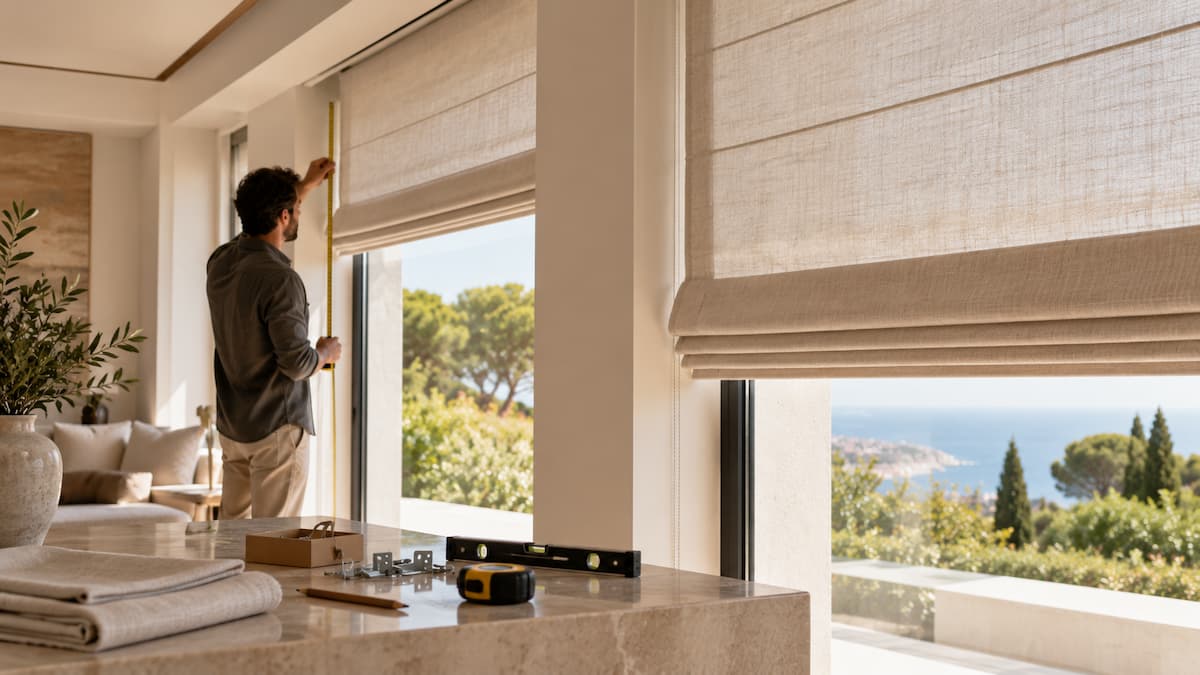
Knowing how to fit roman blinds correctly is what separates a window treatment that looks tailored from one that hangs crooked and stacks unevenly. The blind may be beautifully made, but the result depends on accurate measuring, the right fixing position and a headrail that sits perfectly level. This guide covers the whole process, from choosing where the blind will sit to testing the mechanism once installed.
What Makes Roman Blinds Different
Roman blinds are fabric window coverings that gather into neat horizontal folds when raised. Unlike roller blinds, which wind the fabric around a tube, or pleated blinds, which concertina into a slim stack, they keep the softness of fabric while holding a structured shape. Depending on the fabric and lining, they filter daylight gently or block it almost completely, which makes them a favourite in bedrooms, living rooms and home offices.
They combine easily with made to measure curtains and bring warmth where wooden blinds would add hard horizontal lines. Because the fabric carries real weight, learning how to fit roman blinds safely matters more than with lighter coverings.
How to Fit a Roman Blind Toolkit
- The blind with its headrail or cassette
- The brackets supplied with the blind
- Screws and wall plugs suited to your surface
- Drill and the correct drill bit
- Screwdriver, spirit level, measuring tape and pencil
- Step ladder and safety glasses
- A detector for cables and pipes
Fixing systems vary between manufacturers, so read the supplied instructions before drilling, particularly with motorised models.
Do Roman Blinds Sit Inside or Outside the Window?
This decision shapes everything that follows, although the principles of how to fit roman blinds stay the same either way: level brackets, secure fixings and free movement.
Inside the recess
Fitted within the opening, the blind looks integrated and discreet. Check that the recess is deep enough for the headrail and the fabric stack, and that handles or locks will not obstruct it. Ideal for minimalist interiors where the window treatment should recede.
Outside the recess
Mounted above and around the opening, the blind covers shallow recesses, makes the window appear larger and reduces light gaps at the edges. With a blackout lining, it is usually the stronger choice for bedrooms.
How Should Roman Blinds Be Fitted? Start by Measuring
Measuring is where most installations succeed or fail. For an inside recess blind, measure the width at the top, middle and bottom, then the height at the left, centre and right, because very few openings are truly square. For an outside recess blind, measure the area you want covered and allow extra fabric beyond the opening to limit light gaps, following the manufacturer's recommendations.
Record each window separately, since windows that look identical often differ by a few millimetres, and measure twice before ordering or cutting anything. Anyone working out how to fit roman blinds on large windows, unusual shapes or expensive fabrics should consider professional measuring instead.
Checking the Fixing Surface Before You Drill
Identify what you are drilling into: plasterboard, brick, concrete, timber or stone. The material determines which screws and plugs to use, and the fixings supplied with a blind are not suitable for every surface. If you are unsure what sits behind the wall, use a detector first, as cables and pipework often run close to window openings.
Fitting Your Blind: Positioning and Securing the Brackets
Hold the brackets in position, mark the fixing points and check the alignment with a spirit level. This step looks trivial, yet it is the single biggest factor in how to fit roman blinds well: an unlevel headrail produces uneven folds and a visibly crooked blind.
Drill the holes, insert wall plugs where needed and secure the brackets without overtightening, which can damage the surface or pull them out of alignment. Wider blinds usually need extra support brackets, positioned so they never interfere with the mechanism. Check the level again and apply gentle pressure to confirm everything holds firm.
How Do You Attach Roman Blinds to Brackets?
Most modern systems use a headrail that clips or locks into the installed brackets. Lift it into position, align it with each fixing point and engage the clips until they seat fully. Never force the blind: if it resists, remove it and check that the brackets are correctly oriented and spaced. Once attached, operate it gently to confirm the mechanism runs freely, and resist the temptation to rush the final checks.
Checking the Folds and Testing the Mechanism
Raise and lower the blind several times. The fabric should gather into even horizontal sections and stop cleanly at each position. If the folds look irregular, check that the blind is level, that the cords are correctly routed, that the fabric is not twisted and that nothing obstructs the movement. New blinds often need a little use before the fabric settles, especially in linen and textured weaves. With chain operation, confirm the chain runs freely; with motorised blinds, test the remote or home automation connection. Stop immediately if you notice resistance, unusual noise or uneven movement.
Keep cords and chains out of reach of children and pets, follow current child-safety requirements and ask your supplier about child-safe operating systems. Motorised blinds remove accessible chains entirely.
What Are Some Common Problems with Roman Blinds?
- Measuring once. A few millimetres can ruin an inside recess fit.
- Ignoring handles and locks. They collide with the blind on inward-opening windows.
- Skipping the spirit level. Uneven folds almost always start here.
- Using the wrong fixings. A timber screw will not hold in plasterboard.
- Forgetting the fabric stack. A raised blind occupies real space above the window.
- Planning curtains separately. Decide the pole or track position before drilling.
Most complaints about how to fit roman blinds trace back to one of these six points rather than to the blind itself.
Choosing the Right Fabric
Fabric defines both appearance and performance. Linen creates a relaxed, natural look, velvet adds richness to sophisticated rooms, and cotton blends offer the widest choice of colours and patterns, while blackout linings darken bedrooms effectively. For windows exposed to strong sunlight, choose fabrics and linings designed for solar protection. Tones such as ivory, sand, stone and warm white sit comfortably with natural wood, stone floors and neutral walls.
Should You Learn How to Fit Roman Blinds Yourself?
A small, lightweight blind on a straightforward window is a reasonable DIY project with the right tools. Professional installation makes more sense for large or floor-to-ceiling windows, bay windows, motorised systems, heavy fabrics, multiple adjoining windows, high ceilings or difficult access.
Large blinds are awkward to hold while fixing, and a poor installation can damage the wall, the mechanism or the fabric. At Arte del Lusso, made to measure window treatments are designed around each project, taking account of the architecture, the interior style, the fabric and the practical needs of the room.
Final Thoughts on How to Fit Roman Blinds
It comes down to four things: accurate measurements, the correct fixing system, a perfectly level headrail and patient testing. Get those right and the blind looks as though it was designed for that window alone.